
Which technology suits my application?
Optical sensors are divided into different types of technologies. Each has its advantages and disadvantages – know-how and application experience are key for selecting the perfect detector. We will find the right solution for all applications.
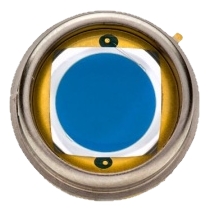 PIN (silicon)
Strengths: PIN photodiodes offer a good dynamic range even in harsh ambient conditions. They are cost-effective and temperature-independent.
Weaknesses: The diodes only have a low bandwidth, offer poor signal-to-noise behavior, and slow signal detection. Internal gain of the signal is not possible.
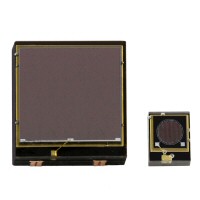 SiPM/SPAD
Strengths: Thanks to the internal signal gain, silicon photomultipliers (SiPM) and single-photon avalanche diodes (SPAD) are able to detect even ultra-low amounts of light.
Weaknesses: SiPM and SPAD have lower sensitivity as compared to avalanche photodiodes (APDs). They have a poor signal-to-noise behavior, are temperature-sensitive, saturation occurs rapidly.
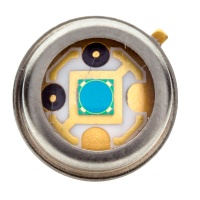 InGaAs
Strengths: Sensors with semiconductors made of indium gallium arsenide offer a high range and an excellent dynamic range even in harsh ambient conditions.
Weaknesses: InGaAs are temperature sensitive thus requiring external cooling. The expensive raw material makes them an expensive solution that is not designed for mass production.
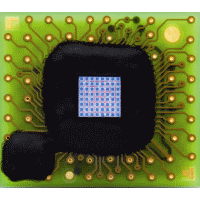 APD (silicon)
Strengths: Avalanche photodiodes (APDs) feature internal signal gain, resulting in at least 80 % of the light being absorbed and thus detected. They offer fast optical signal detection and processing, good signal-to-noise behavior, low saturation, and are inexpensive.
Weaknesses: APDs are temperature-sensitive. Their distance detection is lower than that of alternative methods.
